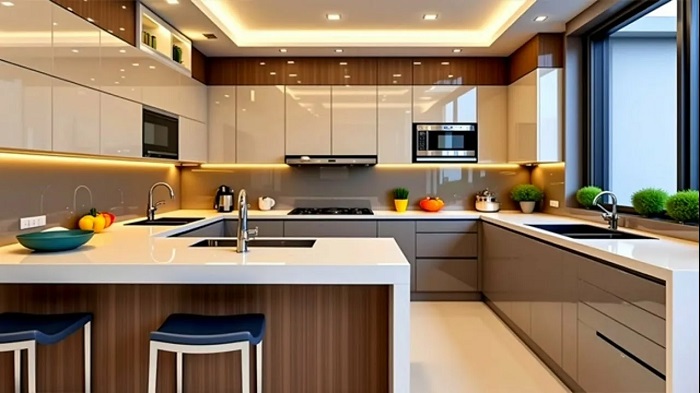
A modern kitchen renovation begins with a well-thought-out concept: how you cook, how many people use the space at a time, where the appliances are stored, and which areas need to be within easy reach. The kitchen has long since ceased to be just a place for cooking – it’s also a workstation, a social area, and often a home office, so convenience, light, and a logical organization are essential in the project.
To prevent a renovation from turning into endless redoing, determine the budget, timeline, and list of works in advance: electrical, ventilation, plumbing, finishing, cabinetry, and appliances. At the planning stage, it’s easier to compare options and decide what’s more cost-effective: a complete overhaul or updating individual elements (facades, backsplash, countertops, lighting). To order a kitchen renovation from professionals, you should visit https://asapreno.ca/.


Materials, lighting, and appliances: modern trends without overpaying
Today’s kitchen trends are practicality, durability, and ease of maintenance. Choose materials that can withstand moisture, temperature, and daily cleaning, and let their appearance complement the overall style of the apartment.
Facades, Countertops, and Backsplash
- Facades: Matte surfaces look modern and reduce glare; choose finishes that are resistant to fingerprints and household chemicals.
- Countertop: Moisture resistance, heat resistance, and repairability are important; plan cutouts for the sink and cooktop in advance.
- Backsplash: Large-format panels or simple tiles create fewer grout lines and are easier to clean; a neutral backsplash lasts longer.
Lighting and Electrical
The ideal kitchen has several lighting patterns: general, task, and accent. Task lighting should be positioned so as not to cast shadows on the countertop, while a warm light temperature makes the space feel cozier.
Ventilation, Sink, and Smart Elements
A quiet, efficient range hood and proper ventilation directly impact the comfort and cleanliness of the kitchen. A deep bowl, a high-quality faucet, water filtration, and a well-designed drain are helpful in the sink area. Built-in waste bins with sorting, soft-close mechanisms, push-to-open systems, and touch-sensitive lighting are also helpful for convenience.
To ensure a risk-free renovation, document the design and estimate, coordinate the layout of utilities before purchasing furniture and appliances, and entrust complex work to professionals. If you need to quickly compare options and timelines, you can order construction on our website and receive a clear action plan.
Results: Family Habits as the Foundation for a Successful Kitchen Remodel
A kitchen remodel shouldn’t begin with choosing cabinets and appliances, but with an honest analysis of how the family actually cooks, eats, and stores food. When a plan is based on real-life scenarios, the kitchen becomes convenient every day, not just in renderings.
Recording habits and routes allows you to eliminate bottlenecks in advance: queues at the sink, insufficient countertops, chaos in storage, and constant traffic flow. This reduces the risk of rework, unnecessary costs, and disappointment after the renovation.
What to check before finalizing the plan
- Cooking scenarios: quick breakfasts, weekly prep, baking, rare «holiday» dishes – each scenario requires its own zones and areas.
- Number of participants: one person cooking or several at a time; who washes the dishes; Who sets/clears the table?
- Peak loads: morning and evening – areas of conflict (sink, refrigerator, kettle/coffee machine) should be cleared.
- Storage: what products are purchased frequently, what is kept «in plain sight,» how much of the dishes and supplies are actually used.
- Appliances and habits: oven vs. multicooker, dishwasher, coffee machine, water filter – appliances should support habits, not force adjustments.
- Safety and comfort: children, elderly, pets; Heights, aisles, hot/spicy areas.
- Gather facts: For 5-7 days, note what you cook, where space is limited, and where you get in each other’s way.
- Describe 3-5 key scenarios: «breakfast on the run,» «dinner for the family,» «hosting,» etc.
- Compare the scenarios with the layout: location of the refrigerator, sink, stove/oven, prep and storage areas.
- Agree priorities: what’s more important—more countertop space, a table, a pantry, an island, additional appliances.
- Check logistics: minimal flow intersections, clear routes «get out > wash > chop > cook > serve > put away.»