A first microchanneling session is a roughly 90-minute appointment performed under numbing cream, followed by one to two days of redness similar to a mild sunburn and several days of light flaking. The outcome depends as much on the week surrounding the session as on the session itself, which is why preparation and aftercare deserve the same attention as the treatment.
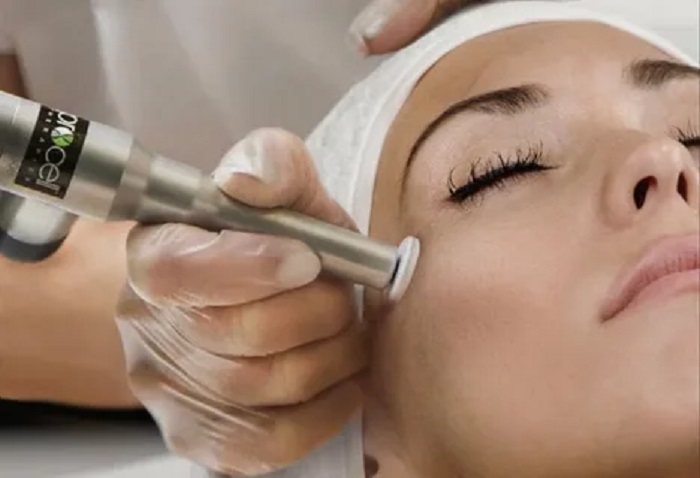
Microchanneling belongs to the family of collagen induction treatments: controlled microscopic channels prompt the skin’s own repair response, which produces new collagen and elastin. Clients who book procell microchanneling in Fort Worth are often surprised to learn that the Procell device stamps rather than rolls. Its fixed-depth needles move vertically, so penetration stays consistent and the skin is not dragged, which is the main technical difference from traditional microneedling.


The collagen response itself is documented. A retrospective analysis of 480 people, published in Plastic and Reconstructive Surgery in 2008, included skin biopsies from 20 of them and reported a considerable increase in collagen and elastin six months after treatment. That study used a rolling device, so it supports the biological principle rather than any specific brand.
How should the skin be prepared in the week before?
Preparation begins three to seven days before the appointment. In that window, retinoids, exfoliating acids, chemical peels, waxing in the treatment area and prolonged sun exposure should all stop, because each of them leaves the skin more reactive than the treatment plan assumes.
A responsible provider works much like a reputable service center, where no repair begins before a diagnostic. At Skin Glow, located at 9705 Tehama Ridge Pkwy, Fort Worth, TX 76177, suite 101, the appointment opens with a consultation and skin assessment. This is the moment to mention a history of cold sores or raised scarring, active breakouts and any recent cosmetic treatment. Some of these are reasons to postpone the session, and the others are easier to plan around when the provider knows about them in advance.
Timing deserves thought as well. Scheduling the appointment so that the first 24 hours fall on a quiet day at home, and not on the eve of a presentation or an outdoor event, removes any pressure to cover the redness with makeup.
Does microchanneling hurt?
Most clients describe the sensation as a light, repetitive stamping with mild prickling, because numbing cream is applied before the device ever touches the skin. Warmth builds gradually as circulation increases. Bleeding is minimal, since the vertical motion creates less trauma than a gliding roller.
The sequence is predictable: cleansing and disinfection, numbing cream, a growth factor serum derived from stem cell cultures, and then the stamping pass across the treatment area. The face, neck and décolleté can all be treated, as can areas of the body such as stretch marks.
What does the skin look like in the first 48 hours?
Redness comparable to a mild sunburn is expected for up to 24 to 48 hours, together with warmth, tightness and sometimes slight swelling. These reactions indicate that the repair process has started. They are not complications.
The aftercare guidance published by the med spa Skin Glow divides recovery into the first 24 hours and days two to seven, and that division is a practical way to think about it. In the first stage the skin is at its most open. In the second it is rebuilding, and dryness with light flaking usually lasts three to five days, after which the renewed surface shows through.
What should be avoided during the first week?
The first 24 hours carry the strictest rules: no touching the treated area, no makeup, no intense exercise, saunas, hot tubs or direct sun, and no active skincare. From day two to day seven, a gentle cleanser, a plain moisturizer and a daily sunscreen of at least SPF 30 are enough.
The most common mistake occurs around day three. The redness has faded, the skin looks presentable, and the temptation is to return to a retinoid, an acid toner or a scrub to hurry the flaking along. Doing so irritates a surface that is still rebuilding and can cancel part of the benefit. Actives should return only once the skin has fully settled, usually after five to seven days, and direct sun should be avoided for 48 to 72 hours.
Complications are rare but real: post-inflammatory hyperpigmentation, reactivation of cold sores and infection among them. Spreading redness, blisters, pus or darkening patches should be reported to the provider promptly instead of being managed at home.
How many sessions does a visible result take?
The number of sessions depends mainly on age and on the concern being treated. Clients in their early to mid-twenties often see a change after a single session, while older skin needs three to six consecutive sessions. Post-acne scarring requires three to six sessions regardless of age, followed by annual maintenance.
Patience is part of the protocol. Collagen forms over weeks and months, which is why the 2008 analysis assessed tissue at six months and not after six days. Results vary between individuals, and a provider who explains that openly at the first consultation deserves more trust than one who promises a transformed face after a single visit.